

For most women, life can feel perfectly normal while cancer grows silently. Typically, there is no pain or obvious warning signs.
Research shows that 1 in 8 women will face breast cancer at some point in their lives, often without any warning or expectation. This is very concerning.
If breast cancer is discovered late, treatment becomes difficult and recovery takes longer. The good news is that nearly two-thirds of breast cancer cases are detected at an early stage due to greater awareness and improved AI-integrated screening technologies.
Too often, women delay screening because they feel healthy, get too busy with their lives, or simply don’t know when to start. Breast cancer screening helps detect cancer early, even before the first symptom appears. In this guide, we will explain what breast cancer screening is, why it is important, how it is done, and what to expect during it. We will also touch upon how ThaiMedics assists you in screening for cancer and overall health journey.

What Is Breast Cancer Screening?
Breast cancer screening are medical tests used to detect breast cancer before any signs or symptoms appear.
It is done to detect breast cancer at an early stage when it is smaller, localized (not yet spread in other parts of the body), and more responsive to treatment.
Breast cancer screenings and diagnostic tests are often confused, but there is a clear difference. Diagnostic tests are given for women who have already developed symptoms (like lumps or pain) and screening tests are recommended for women without symptoms but could be at risk.
For example, a screening mammogram is a part of routine breast cancer screening, while a diagnostic mammogram may be advised if an abnormality is detected. This difference being cleared up, let’s proceed. Next, we will talk about why breast cancer screening is essential for women.
Why Is Breast Cancer Screening Important?
Breast cancer screening is essential because breast cancer often develops silently in its early stages.
Studies show that early-stage breast cancers are far more treatable, with significantly higher survival rates compared to cancers diagnosed after they have spread beyond the breast.
This is why regular screening is considered one of the most effective tools for reducing breast cancer–related mortality.
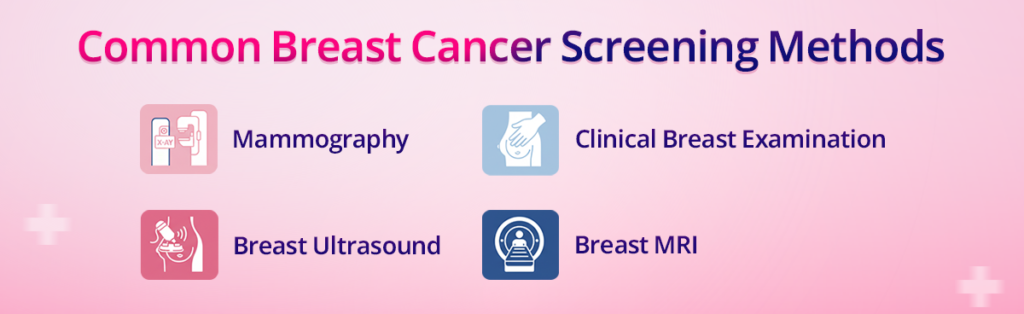
Common Breast Cancer Screening Methods
Several screening tools are used depending on
- Age
- Risk factors
- Breast tissue characteristics.
A healthcare provider may recommend one or a combination of the following methods:
Mammography
Mammography is the most widely used and evidence-based screening test for breast cancer. It uses low-dose X-rays to detect changes in breast tissue that may not be felt during a physical exam.
Mammography can:
- detect tumors years before symptoms appear
- be particularly effective for women aged 40 and above
- linked to lower rates of advanced-stage breast cancer diagnosis if done regularly
Because of its proven effectiveness, mammography is the foundation of most national and international breast cancer screening guidelines.
Clinical Breast Examination (CBE)
A clinical breast examination is a physical examination of the breasts performed by a trained healthcare professional.
Although it does not replace imaging tests, it can help identify abnormalities which are visible or palpable (felt by touch). It is often used as a complementary screening method, especially in places with limited access to imaging.
Breast Ultrasound
Breast ultrasound uses sound waves to create images of breast tissue. It is commonly used:
- As a follow-up test after an abnormal mammogram
- For women with dense breast tissue
- When further details is needed
Ultrasound does not replace mammography but provides additional detail in specific cases.
Breast MRI (For High-Risk Individuals)
Breast MRI is a more sensitive imaging test often recommended for women at high risk of breast cancer, such as those with a strong family history or genetic risk factors.
MRI is typically used alongside mammography rather than as a standalone screening tool.
What to Expect During a Breast Cancer Screening Appointment
For many women, uncertainty about the screening process itself can be a major barrier to booking an appointment.
Understanding what to expect during a breast cancer screening can help reduce anxiety and encourage timely participation.
While the exact experience may vary, most screening tests are straightforward, quick, and non-invasive.
Preparation Before Your Screening Appointment
Proper preparation can help ensure accurate results and a smoother experience. Before attending a breast cancer screening appointment, patients are typically advised to:
- Schedule the screening when breasts are least tender
- Avoid applying deodorant, powders, lotions, or perfumes on the chest or underarm area
- Wear a two-piece outfit for convenience
- Inform the provider about any previous breast procedures
- Bring prior mammogram images or reports if available
These steps help reduce the likelihood of image distortion and unnecessary follow-up tests.
Key Benefits of Breast Cancer Screening
Early Detection Saves Lives
The primary benefit of breast cancer screening is early detection.
Screening tests can identify cancer before symptoms develop, often at a stage when it is small and localized.
Breast cancers detected early have significantly higher survival rates.
More Treatment Options and Better Outcomes
When breast cancer is detected early through screening:
- Surgery may be less complicated
- Chemotherapy may be avoided or reduced
- Recovery times are often shorter
- Long-term complications are fewer
Early diagnosis allows healthcare teams to personalize treatment plans and focus on preservation of breast tissue whenever possible.
Peace of Mind
Regular screening provides reassurance for many women. Knowing that breast health is being monitored helps:
- Reduce uncertainty
- Encourage proactive healthcare habits
- Support long-term preventive care planning
Limitations and Potential Risks of Breast Cancer Screening
While the benefits are many, it is equally important to understand the limitations of breast cancer screening.
False-Positive Results
A false-positive result occurs when a screening test suggests an abnormality that later turns out to be non-cancerous.
This may lead to:
- Additional imaging tests
- Temporary anxiety or stress
- Short-term inconvenience
However, most abnormal screening results do not result in a cancer diagnosis. Follow-up tests are routinely taken to ensure accuracy.
False-Negative Results
In some cases, screening may not detect an existing cancer—known as a false-negative result. This can happen due to:
- Dense breast tissue
- Very small or early-stage tumors
- Limitations of imaging technology
This is why screening should be combined with breast awareness and regular medical check-ups.
Overdiagnosis
Screening may occasionally detect slow-growing cancers that might never cause symptoms during a person’s lifetime.
This can lead to treatment that may not have been strictly necessary.
Medical guidelines aim to balance benefits and risks through informed decision-making.
Balancing Benefits and Risks Through Informed Decision-Making
Most experts agree that informed decision-making is important. Screening recommendations are designed to maximize benefits while minimizing potential harms by:
- Targeting appropriate age groups
- Adjusting frequency based on risk
- Using additional tests only when necessary
How can ThaiMedics help with taking a proactive approach to your Breast Health
Breast cancer screening is one of the most effective steps women can take to protect their long-term health.
Recommendations vary, but the core message remains consistent: detecting breast cancer early saves lives.
It is best if you see an experienced specialist to evaluate your specific condition. World class hospitals in Thailand like Bangkok Hospital can provide cost-effective options to save you time and money.
For women looking for screening options or diagnostic tests with world-class healthcare providers, Thailand can be an excellent choice. ThaiMedics has assisted thousands of patients find the right healthcare provider in Thailand saving a lot of worry and confusion. For hassle-free access to specialized medical services in Thailand, book an appointment today.
Frequently Asked Questions (FAQs)
Does a mammogram hurt?
A mammogram may cause temporary discomfort or pressure, but it is usually brief and lasts only a few seconds per image. Most women describe the experience as uncomfortable rather than painful.
What if my breast cancer screening result is abnormal?
An abnormal screening result does not automatically mean cancer. In fact, most abnormal findings turn out to be harmless. Additional tests are usually required to clarify results.
Can younger women get breast cancer screening?
Yes. Younger women with symptoms or higher risk factors may be advised to undergo screening earlier.
Are breast cancer screening tests safe?
Breast cancer screening tests, including mammography, are considered safe and well-regulated.
Why is breast cancer screening important if I feel healthy?
Yes. Breast cancer often develops without noticeable symptoms in its early stages. Screening helps detect cancer before symptoms appear when treatment is most effective.