
Lung cancer is a complex disease. It is further complicated by doctors using technical words that sound like a code language.
So, it’s normal to feel overwhelmed. But the good news is, in 2026, we have a much better understanding of lung cancer types and treatments. Today we are much better prepared to help patients fight back.
This guide will help you understand those complex medical terms and treatments. Whether you are a patient, a family member, or just curious to learn, we will break down the various types of lung cancer and treatment options.
Let’s proceed to talk more about lung cancer, its diagnosis, and its treatment options.
Understanding Lung Cancer
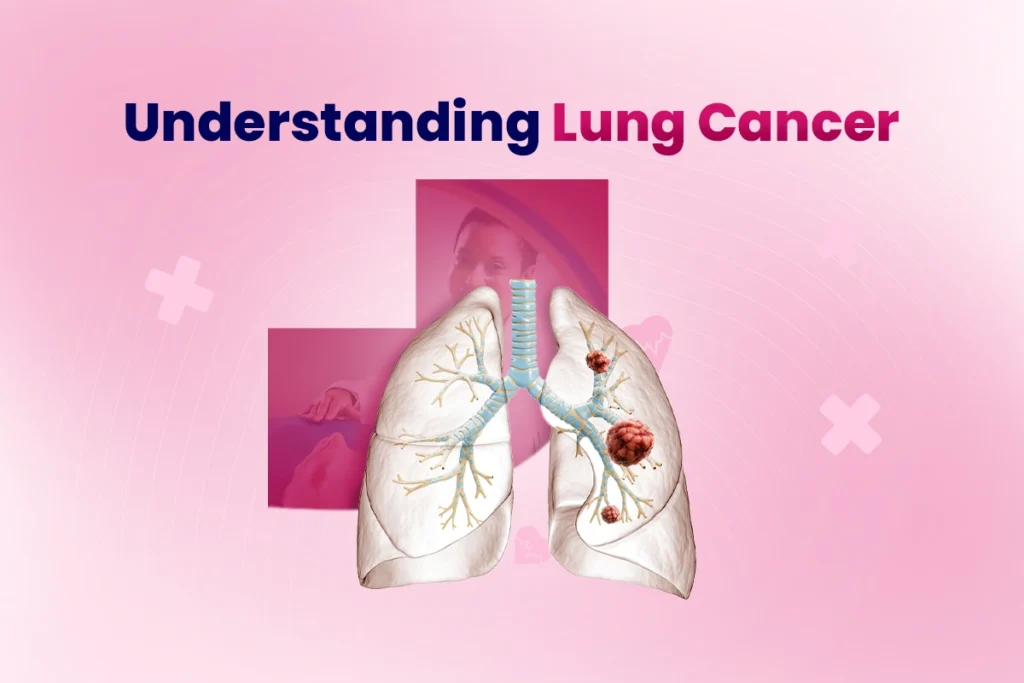
In simple terms, lung cancer occurs when abnormal cells in the lungs begin to divide and grow uncontrollably. Instead of developing into healthy lung tissue that helps us to breathe, these cells form a mass called a tumor.
Lung cancer is not one single disease—it is a group of different diseases. Each type of lung cancer behaves differently, grows at a different speed, and requires a specific type of treatment.
Types of Lung cancer
NSCLC vs. SCLC
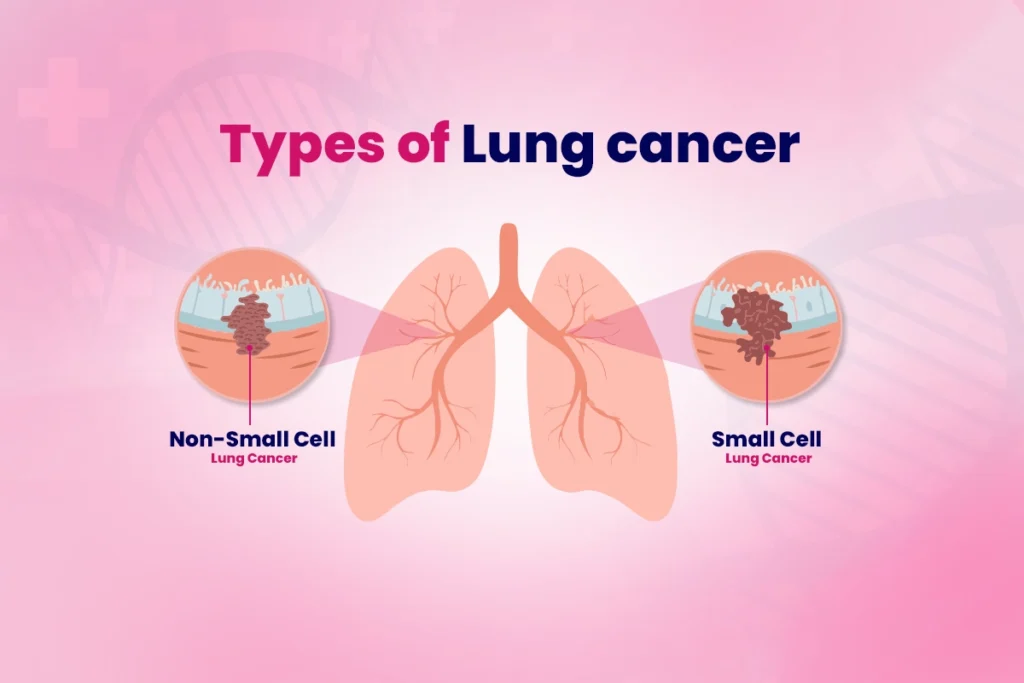
To choose the right treatment, doctors must first identify which type of lung cancer is present. There are two main categories: Non-Small Cell Lung Cancer (NSCLC) and Small Cell Lung Cancer (SCLC).
Non-Small Cell Lung Cancer (NSCLC)
This most common category represents about 85% of all lung cancer cases. Under a microscope, these cancer cells look comparatively large. NSCLC usually grows and spreads more slowly than SCLC.
Small Cell Lung Cancer (SCLC)
SCLC makes up about 15% of cases. Under a microscope, the cells look very small and circular.
SCLC is much more aggressive, meaning it grows and spreads to other parts of the body very quickly. Because it grows so fast, it often responds very well to initial treatments like chemotherapy and radiation.
In 2026, new clinical procedures are helping patients manage SCLC for much longer periods than in the past.
Rarer forms of Lung Cancer
These are rarer forms of lung cancer.
- Carcinoid tumors are usually slow-growing and start in special hormone-producing cells.
- Mesothelioma is a cancer of the lining of the lungs and is almost always caused by breathing in asbestos fibers.
Lung Cancer treatment in 2026
Treatment for lung cancer was very different 10 years back. Today, precision treatment is widely applied.
In the past, doctors mostly relied on chemotherapy, which uses strong medicine to kill fast-growing cells throughout the whole body.
Today, we have “smart drugs.” Using advanced technology, doctors can now look at the DNA of a tumor to find the exact “glitch” causing the cancer. This allows for treatments such as targeted therapy and immunotherapy.
Modern Precision Treatment
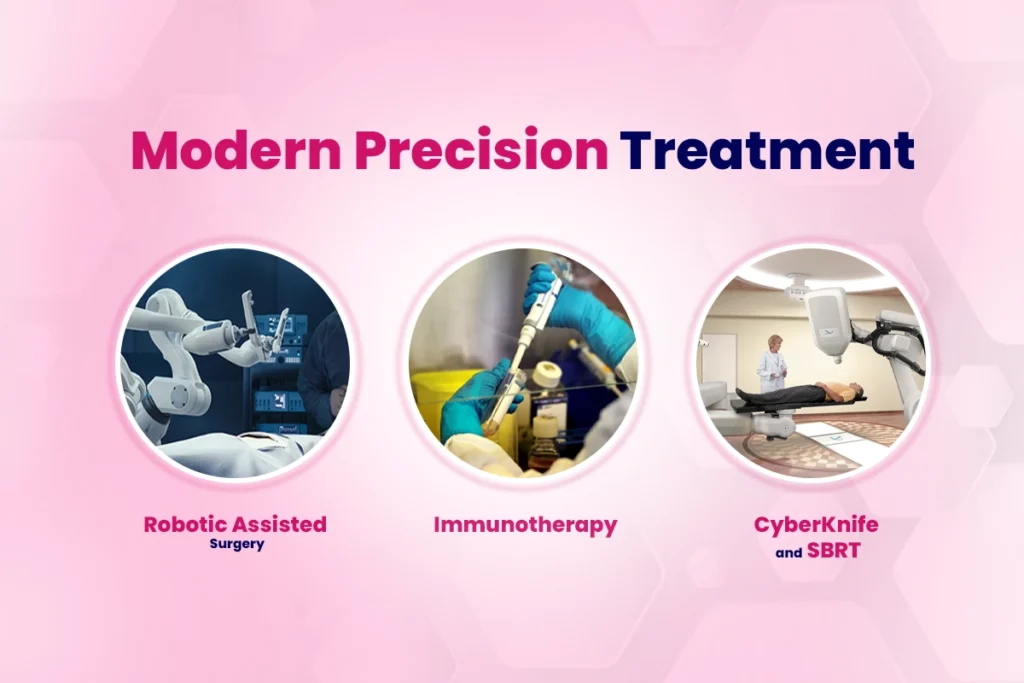
As medical science advances into 2026, the treatment for lung cancer has become highly specialized. Instead of using a one-size-fits-all approach, medical teams now utilize a “Precision Toolkit.” These modern treatments are designed to be more effective while causing less harm to the rest of the body.
Targeted Therapy: The “Smart Drug”
Targeted therapy is a major advancement in cancer care. While traditional chemotherapy affects all fast-growing cells, targeted therapy is designed to recognize and attack specific proteins or “glitches” found only on cancer cells.
How it works: Once biomarker testing identifies a specific mutation, the patient is given a drug that works like a key in a lock. It “plugs” the mutation, stopping the cancer cell from receiving the signal to grow or divide.
The Benefit: Because these drugs ignore healthy cells, patients often experience fewer side effects than they would with traditional chemotherapy.
Immunotherapy: Helping the Body Fight Back
Immunotherapy for NSCLC and SCLC is one of the biggest advances in modern cancer treatment. The immune system normally uses special cells called T-cells to find and destroy harmful invaders like viruses and cancer cells.
But cancer cells can be tricky. They produce certain proteins that act like an “invisibility cloak.” This hides them from the immune system, making them look like normal, healthy cells.
The solution: Immunotherapy drugs, called checkpoint inhibitors, remove this invisibility cloak. Once the cloak is removed, the patient’s own T-cells can then recognize the cancer, attack it, and help destroy the tumor naturally.
VATS and Robotic-Assisted Surgery
For many patients, removing the tumor through surgery is the best path to a cure. In 2026, large “open-chest” surgeries (thoracotomies) are becoming rare. They have been replaced by minimally invasive techniques such as—
VATS (Video-Assisted Thoracic Surgery): A surgeon makes 1–3 small “keyhole” incisions. They insert a tiny camera and specialized tools to remove the tumor. This results in much less pain and a faster return home.
Robotic-Assisted Surgery: Using systems like the da Vinci robot, a surgeon sits at a console and controls robotic arms with incredible precision. The robot can move in ways a human hand cannot, allowing for very delicate work around sensitive lung tissue.
Precision Radiation: CyberKnife and SBRT
If a patient isn’t strong enough for surgery, doctors use a special treatment called SBRT. Instead of cutting the cancer out, SBRT uses precise energy beams to “zap” the tumor from the outside. It is a great, painless option for people with heart or lung problems because it doesn’t require a hospital stay.
CyberKnife: This is a specialized robotic system used to deliver SBRT. It uses a robotic arm to aim high-dose radiation beams at the tumor from hundreds of different angles.
Advantage of CyberKnife: One of the hardest things about treating lung cancer with radiation is that the lungs move when you breathe. The CyberKnife system uses Synchrony technology to track the tumor’s movement in real-time. If the patient breathes, the robot moves with them, ensuring the radiation hits the cancer with sub-millimeter accuracy while leaving healthy lung tissue untouched.
NSCLC vs. SCLC: Choosing Strategy
The biggest decision depends on whether the cancer is Non-Small Cell (NSCLC) or Small Cell (SCLC).
For NSCLC (The “Slow” Type): Because it stays in one place longer, doctors often try to remove it with surgery first. If it has spread, they use targeted therapies or immunotherapy because these cells often have “switches” (biomarkers) that those drugs can turn off.
For SCLC (The “Fast” Type): Because this type spreads very quickly, surgery is rarely the first choice. Instead, doctors use chemotherapy and radiation together. SCLC is very sensitive to these treatments, so they can shrink the tumors throughout the body all at once.
Sub-Types: Picking the Right Medicine
Even within the same category, the specific subtype matters. For example, in NSCLC:
Adenocarcinoma: This subtype is very likely to have “genetic typos” (biomarkers). Because of this, patients with adenocarcinoma are almost always tested for targeted therapy options before starting any other treatment.
Squamous Cell: These tumors often grow near the center of the chest. Doctors have to be careful with certain drugs that can cause bleeding in this area. Instead, they might use specific types of immunotherapy that work better for this cell type.
Why Thailand has Become a Global Hub for Lung Cancer
In 2026, many patients are looking beyond their home borders to find the best possible care. Thailand has emerged as a top choice because it bridges the gap between advanced technology and immediate access.
World-Class Care Without the Wait
Bangkok’s JCI-accredited centers, such as Bangkok Hospital and Phyathai 1, offer the same rigorous safety standards as top Western facilities but without the long delays. These hubs utilize 2026’s latest technology, including da Vinci Xi surgical robots and AI-enhanced PET-CT scans for pinpoint accuracy. Most international patients can complete their full diagnostic tests and meet with a leading specialist within just a few days of arrival.
ThaiMedics: Your Partner in Advanced Cancer Care in Thailand
Choosing to travel for care is a major step, but you don’t have to take it alone. ThaiMedics acts as your personal bridge to Thailand’s world-class oncology experts, ensuring your journey is smooth and stress-free.
For a free consultation, book an appointment today.
FAQs
1. Can lung cancer be managed long-term?
Yes. In 2026, many patients live active lives for years after a diagnosis. Thanks to “smart” pills and immunotherapy, we often treat lung cancer as a manageable journey rather than an immediate crisis.
2. Can I have lung cancer if I never smoked?
Yes. Anyone with lungs can be at risk due to genetics, air quality, or environment. Interestingly, people who have never smoked often respond exceptionally well to the latest targeted treatments.
3. What are the main types of lung cancer treatment?
Treatment in 2026 is highly personalized, typically involving:
- Surgery: Removal of the tumor (best for early-stage NSCLC).
- Targeted Therapy: Drugs that attack specific genetic mutations (smart pills).
- Immunotherapy: Boosting the immune system to destroy cancer cells.
- Radiation Therapy: Precision high-energy beams to kill localized tumors.
- Chemotherapy: Systemic medication to kill fast-growing cancer cells.
4. Which type of lung cancer is most curable?
Early-stage Non-Small Cell Lung Cancer (NSCLC) is the most curable, with 5-year survival rates exceeding 90% if caught at Stage IA. Typical carcinoid tumors are also highly curable due to their slow growth.
5. Is it safe to travel to Thailand for medical care?
Absolutely. Thailand is a top global medical hub. Our partner hospitals meet the highest international safety standards and use the same advanced technology and medicines found in the US or UK.
6. How does ThaiMedics help with medical treatment costs?
By connecting you with Thailand’s efficient medical system, we provide access to life-saving care at 50% to 70% less cost than in many other countries. We offer clear, upfront pricing so you can focus on healing stress-free.