

Most serious health problems don’t start loudly. They usually give small signals first. The trouble is, many of us don’t pay attention to those signals until they become hard to ignore.
Bladder cancer often works this way. In the beginning, it rarely causes sharp pain or dramatic symptoms. Instead, it shows up as small changes that feel easy to dismiss. Because of that, people delay getting checked.
This guide talks through the early signs of bladder cancer, how it develops, and when it makes sense to see a doctor. It also touches on treatment options in Thailand, where hospitals like Bangkok Hospital care for patients from around the world. For those traveling internationally, Thaimedics helps arrange medical appointments and treatment support so the process feels less overwhelming.
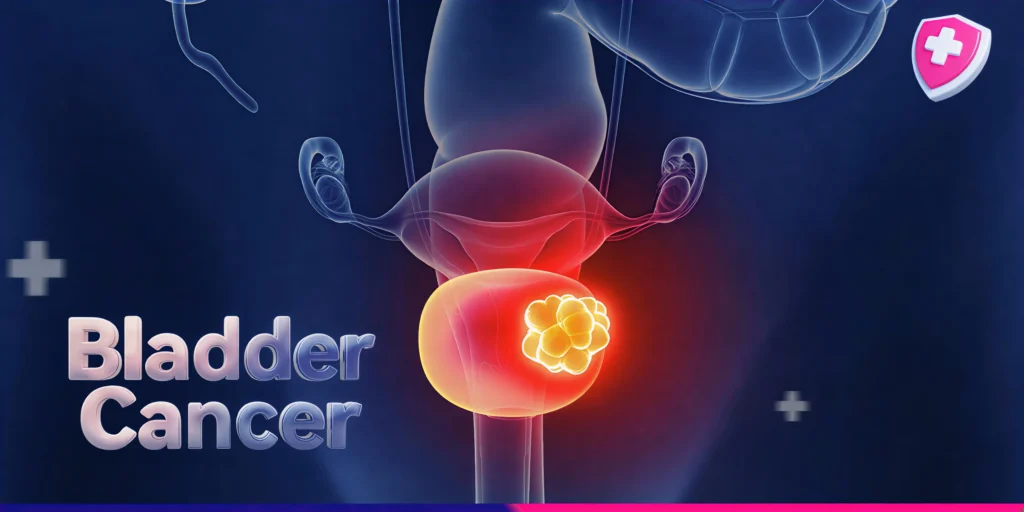
What Bladder Cancer Is ?
Bladder cancer starts when cells inside the bladder begin to grow in an abnormal way. Over time, these cells can form a mass. If nothing is done, the cancer may grow deeper into the bladder wall or spread beyond it.
Most people diagnosed are over the age of 50, and men are affected more often than women. Doctors frequently see links to smoking and long-term exposure to certain chemicals. That said, bladder cancer doesn’t follow a strict pattern. Younger adults can develop it too, even without obvious risk factors.
How the Bladder Works (Why It Matters) ?
The bladder’s job is simple. Your kidneys clean waste from your blood and turn it into urine. That urine flows through two small tubes into the bladder, where it’s stored until you’re ready to go.
The inside of the bladder is lined with flexible cells that stretch and relax as the bladder fills and empties. These cells are constantly in contact with urine—and they’re where most bladder cancers begin. That’s why changes in urination are often the first clue that something isn’t right.
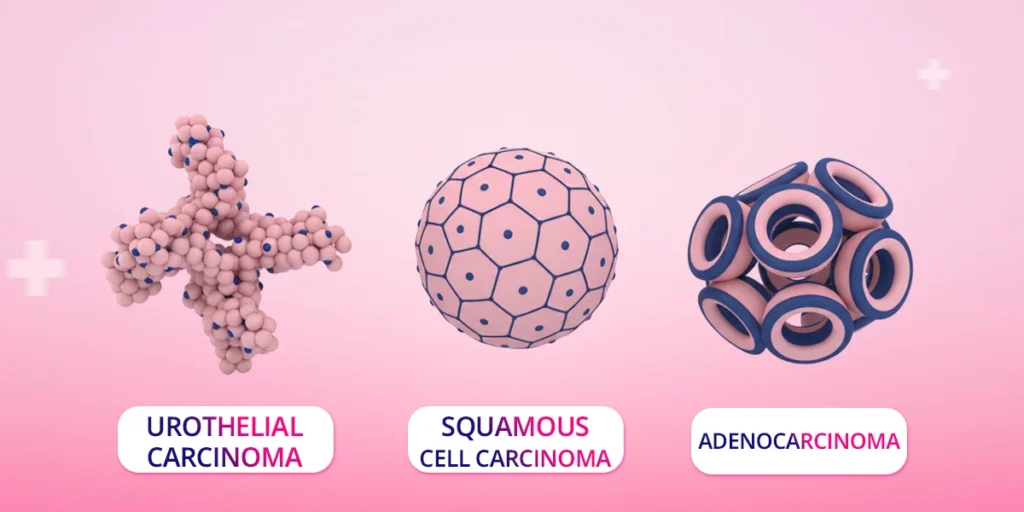
Types of Bladder Cancer
Doctors group bladder cancer based on which bladder cells are involved. This helps them understand how the cancer might behave and how to treat it.
Urothelial Carcinoma
This is the most common type. It accounts for the majority of bladder cancer cases. It starts in the inner lining of the bladder.
In some people, it stays close to the surface. In others, it grows deeper over time. Smoking and long-term chemical exposure are often linked to this type, which is why doctors usually ask detailed questions about lifestyle and work history.
Squamous Cell Carcinoma
This form is less common and usually develops after years of irritation inside the bladder. Repeated infections, long-term catheter use, bladder stones, or certain parasitic infections can all play a role.
By the time this cancer appears, the bladder has often been under stress for a long time.
Adenocarcinoma
Adenocarcinoma of the bladder is rare. It develops from gland-like cells and is sometimes linked to long-standing inflammation or structural issues present from birth.
Because it’s uncommon, diagnosis and treatment often require experienced specialists.
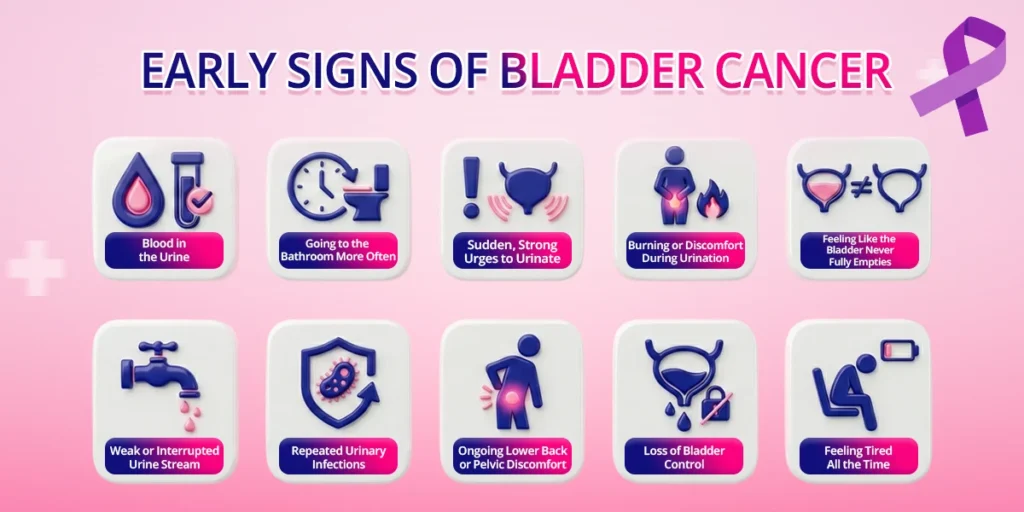
Early Signs of Bladder Cancer
Bladder cancer usually doesn’t announce itself clearly. It tends to start quietly, with changes that feel easy to ignore.
Many people later say they noticed something early on but didn’t think it mattered. Sometimes, it does.
Blood in the Urine
Blood in the urine can look different from person to person. It might appear pink, red, brown, or not be visible at all. In some cases, it’s only found during testing.
People often try to explain it away. Dehydration. A mild infection. Something they ate. But blood in urine isn’t considered normal, even if it happens once and then disappears.
Needing to Urinate More Often
Going to the bathroom more frequently can start slowly. You may wake up at night or feel like you’re planning your day around restroom access.
Because there’s usually no pain, people adjust instead of questioning it. When this pattern continues without a clear reason, it’s worth getting checked.
Sudden Urges That Come Out of Nowhere
Some people feel an intense urge to urinate even when the bladder isn’t full. When they go, very little comes out.
This can be frustrating and confusing. It’s often blamed on stress or an overactive bladder. When it keeps happening, it may be a sign that the bladder lining is irritated.
Burning or Discomfort During Urination
Burning is commonly treated as an infection, and often that’s correct. The concern starts when symptoms don’t improve or keep returning.
When treatment doesn’t work as expected, doctors begin to look deeper.
Feeling Like the Bladder Never Fully Empties
Some people describe a constant pressure, even after using the bathroom. The urge seems to come back quickly.
This sensation is subtle, which is why it’s easy to ignore. But it can happen when urine flow is partially blocked.
Weak or Interrupted Urine Stream
Difficulty starting or maintaining a steady stream is often blamed on prostate issues. Sometimes that’s true. Sometimes it isn’t.
Bladder-related problems can cause similar symptoms, which is why testing matters.
Repeated Urinary Infections
One infection is common. Several in a short time isn’t. When infections keep returning or never fully clear, doctors usually look for an underlying cause. Changes in the bladder can make infections more likely.
Ongoing Lower Back or Pelvic Discomfort
Lower back or pelvic pain has many possible causes. But when it doesn’t improve or shows up alongside urinary changes, it deserves attention. It’s not the most common symptom, but it does appear in real cases.
Loss of Bladder Control
Leaking urine or trouble holding it can be hard to talk about. Many people keep it to themselves. When it starts suddenly or gets worse over time—especially with other urinary changes—it’s a sign not to ignore.
Feeling Tired All the Time
Everyone gets tired. That’s why this symptom is often dismissed. But when fatigue doesn’t improve and shows up alongside urinary issues, doctors take it more seriously. It’s often the pattern of symptoms that matters most.
When to See a Doctor ?
Blood in the urine should always be checked, even if it happens only once.
The same applies to symptoms that don’t settle down, like repeated infections, burning, or noticeable changes in urination. Doctors usually start with simple tests and move forward only if needed. Early checks can prevent bigger problems later.
Treatment Options in Thailand
Thailand is a common choice for patients seeking medical care. Hospitals such as Bangkok Hospital offer modern diagnostic tools, surgical options, and cancer treatments tailored to each patient.
For international patients, Thaimedics helps coordinate appointments, treatment planning, costs, and travel-related support. This allows patients to focus on their health instead of logistics.
Final Thoughts
Bladder cancer doesn’t always make itself obvious. It often starts with small signs that are easy to explain away.
Paying attention early can change the outcome. For those considering treatment abroad, Thailand offers reliable care through hospitals like Bangkok Hospital. With support from Thaimedics, accessing that care becomes more manageable.
Listening to your body early can protect more than your health—it can protect your future.