
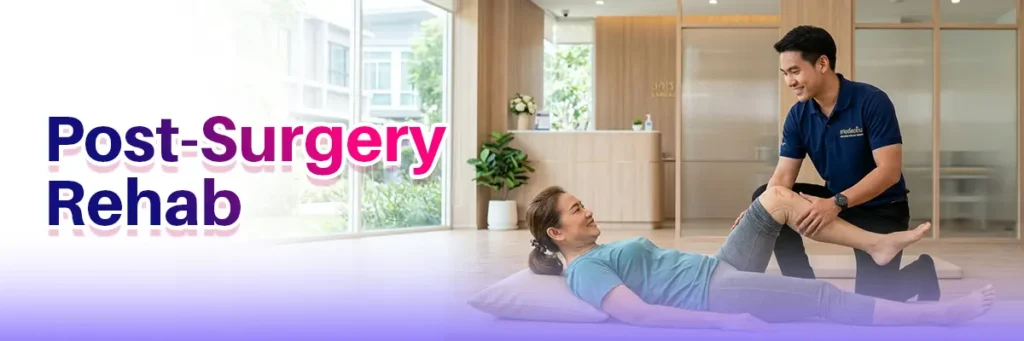
Post-surgery rehab is the guided therapy you do after an operation. It helps you rebuild strength, mobility, and flexibility. Rest alone will not bring back full movement.
Surgery repairs the tissue, but your body still feels weak. Muscles get stiff, and joints lose motion fast. The right plan turns a slow recovery into a smooth one.
This guide covers what to expect at every stage. You will learn the phases, the timelines, and the risks. You will also see how to heal with the right support.
What Is Post-Surgery Rehab?
Post-surgery rehab is a planned recovery program after an operation. A physical therapist guides you through safe exercises and stretches. The goal is to restore normal movement and strength.
Your plan depends on the surgery type and your health. It covers a range of motion, balance, and muscle control. Each session builds on the last one. The plan also grows with you over time. Easy moves come first, then harder ones. So why does this matter so much for healing?
Why Is Physical Therapy After Surgery So Crucial?
Physical therapy after surgery speeds healing and lowers your risks. It brings fresh blood to the area that needs repair. That blood carries oxygen and nutrients to healing tissue.
Movement also keeps your muscles awake and strong. Without it, muscles shrink and joints grow stiff. Post-surgery rehab helps you return to daily life sooner.
Studies show active patients recover faster than resting ones. Bed rest weakens the heart, lungs, and muscles. So gentle movement beats lying still every time.
Therapy also rebuilds your confidence and independence. You learn to trust your body again. These gains connect to the problems rehab helps you avoid.
Here’s the expanded section. Same rules hold throughout: short sentences, no em dashes, no comma plus -ing, snippet-style answers.
What Problems Does Post-Surgery Rehab Prevent?

Rehab prevents many common problems after surgery. It targets clots, stiffness, and muscle loss early. Each problem grows worse when you stay still too long.
Your body wants to protect the wound after surgery. So it limits movement and braces the area. But too little movement creates new problems of its own. Good therapy keeps you safe from these setbacks.
Blood Clots and Poor Circulation
Long rest can cause dangerous blood clots in your legs. These clots form when blood pools and slows down. They may travel and block your lungs.
This problem is called deep vein thrombosis. It often shows up in the first weeks after surgery. Gentle movement keeps blood flowing and cuts this risk.
Simple moves like ankle pumps protect your circulation. Short walks also push blood back toward your heart. Early activity is one of the best clot defenses.
Joint Stiffness and Scar Tissue
After surgery, scar tissue forms around the wound. This tissue is part of normal healing. But too much of it can lock a joint and limit motion.
Stiff joints make daily tasks slow and painful. You may struggle to bend, reach, or climb stairs. Range of motion exercises keep the joint loose and free.
Steady stretching breaks up tight scar tissue early. Your therapist guides each move to protect the area. This work saves you from long-term stiffness later.
Muscle Weakness and Atrophy
Unused muscles get weak within a few days. This loss is called muscle atrophy. The longer you rest, the more strength you lose.
Weak muscles cannot support your joints well. This raises your risk of falls and new injuries. Therapy rebuilds strength before the weakness takes hold.
Light resistance work wakes up sleepy muscles. Your therapist adds load as your body heals. Strong muscles then carry you through daily life.
Pain and Long-Term Discomfort
Many patients fear that movement will increase pain. The truth is the opposite for most cases. Gentle therapy actually lowers pain over time.
Movement releases natural chemicals that ease discomfort. It also reduces swelling around the surgical site. Less swelling means less pressure and less pain.
Therapy can even cut the need for strong medication. Studies link early therapy to lower opioid use. So safe movement protects both your comfort and your health.
What Types of Surgery Need Rehab?
Many surgeries need rehab, not just joint ones. Orthopedic surgery almost always calls for therapy. This includes knee, hip, shoulder, and spine procedures.
Heart and chest surgery also need careful rehab. Breathing exercises protect the lungs after these operations. Light movement helps the heart grow strong again.
Abdominal and cancer surgery can also need rehab. Therapy rebuilds core strength and daily function. Your surgeon will tell you what your body needs.
Why Prehab Before Surgery Helps Too
Prehab means doing physical therapy before your surgery. It builds strength and mobility ahead of the operation. A stronger body heals faster and with fewer problems.
Your therapist teaches the exercises you will need later. You also learn how to use a walker or crutches. This practice removes much of the fear and stress.
Research shows prehab can lower the care you need afterward. Many patients start it four to eight weeks before surgery. A strong start often means a shorter recovery. Timing after surgery matters just as much.
When Should You Start Physical Therapy After Surgery?

Most patients start therapy within 24 to 48 hours. Early movement protects your muscles and joints. Your surgeon decides the safe time to begin.
Some people fear pain and want to wait. But waiting too long makes recovery slower and harder. A gentle start now saves you months of struggle later. So what does a real rehab plan look like?
What Does a Rehab Plan Include?
A rehab plan mixes movement, strength work, and rest. Your therapist sets the pace based on your body. The plan changes as you grow stronger each week.
How Your Therapist Builds the Plan
Your therapist starts with a full body check. They test your strength, motion, and pain level. They also review your surgery and health history. From there, they set clear and simple goals. The plan grows harder as your body heals. They adjust each week based on your progress.
Common Early Exercises
Early moves stay simple and safe for the wound. Quad sets gently wake the thigh muscle. Heel slides improve your knee and hip motion. Ankle pumps boost blood flow and lower clot risk. Supported standing rebuilds your balance with care. Each move prepares you for harder work ahead.
Common Therapy Techniques
Therapists use more than just exercise to help you heal. Each method targets pain, swelling, or stiff tissue. Common techniques include:
- Manual therapy, which uses hands-on massage and joint work.
- Cold and heat, which ease swelling and relax tight muscles.
- Electrotherapy, which calms pain and wakes weak muscles.
- Breathing exercises, which protect your lungs after surgery.
The Main Phases of Post-Surgery Rehab
Post-surgery rehab moves through three main phases. Each phase has its own goal and pace. Your body must finish one stage before the next. Your therapist watches your progress at every step. They move you forward only when you are ready. This careful order keeps your recovery safe and steady.
Phase 1: Rest and Protection
This first phase starts right after your surgery. The main goal is to protect the healing wound. Your body needs time to close and settle. You manage pain and swelling with cold packs and rest. Gentle breathing and small moves keep blood flowing. Light movement begins while the wound heals.
Most patients spend a few days in this phase. The exact length depends on your surgery type. Your care team tells you when to move on.
Phase 2: Gentle Movement
Now your therapist adds slow, guided exercises. These moves rebuild range of motion and balance. The focus shifts from rest to careful motion. You start to bend, stretch, and stand with help. Each move stays light to protect the surgical site. A clear plan and steady post-treatment support keep this phase on track.
This stage often lasts a few weeks. Swelling drops and daily tasks feel easier. Your confidence in movement grows step by step.
Phase 3: Strength and Function
The final phase builds real strength and stamina. You practice stairs, walking, and daily tasks. Here, the goal is a full return to normal life. Your therapist adds resistance and harder drills here. These exercises rebuild muscle and steady your balance. Each week you push a little further.
This stage returns you to normal daily life. Some patients also train for sport or work. Strong habits now protect you for years to come.
How Long Does Post-Surgery Rehab Take?

Post-surgery rehab can take a few weeks or several months. The length depends on your surgery and your body. Here are common recovery timelines by surgery type:
- Knee replacement: three to six months for strong, daily use.
- Hip replacement: six to twelve weeks for most daily tasks.
- Shoulder surgery: four to six months for full use.
- Back surgery: several weeks to a few months.
Older adults sometimes need a little more time. Your effort in therapy shapes the final result. Steady work brings faster and stronger recovery.
Simple Habits That Speed Up Recovery
Small daily choices support your healing tissue. Good food, rest, and a safe home all help. These habits work alongside your therapy plan. Protein helps your body rebuild muscle and tissue. Water keeps your blood flowing and your joints fed. Fruit and vegetables give you healing vitamins.
Sleep is when your body does its deep repair. Aim for steady, restful nights during recovery. A tidy home also lowers your fall risk.
The Mental Side of Recovery
Recovery is not just a physical journey. Surgery and pain can wear down your mood. Many patients feel low, anxious, or tired. A steady routine brings back a sense of control. Small wins in therapy lift your spirits. Each new step rebuilds your confidence.
Family and friends play a big role here. Their support keeps you calm and motivated. Counseling can help when the stress feels heavy.
Warning Signs You Should Never Ignore
Some symptoms after surgery need fast medical help. They can point to infection or a blood clot. Call your doctor if you notice any of these:
- Fever, chills, or drainage from the wound.
- Redness, warmth, or swelling that gets worse.
- Sharp calf pain or swelling in one leg.
- Chest pain or sudden shortness of breath.
What Happens If You Skip Post-Surgery Rehab?
Skipping rehab often leads to pain and stiffness. You may lose motion that never comes back. Weak muscles then shift stress to other joints.
Your body learns bad movement habits to cope. These habits cause new aches over time. Some people even need a second surgery later. Recovery gets much harder when you face it alone.
Recovering After Surgery Far From Home

Many people travel abroad for surgery and treatment. Recovery away from home brings extra challenges. Good support makes this journey safe and calm. A strong care team plans your follow-up visits. They track your progress through regular check-ins. Telemedicine lets you consult doctors from your own home.
This care covers your body and your mind. It also handles medication, diet, and emotional needs. You never feel lost during your healing journey. The right partner turns recovery into true peace of mind.
Start Your Recovery With ThaiMedics Today
Your healing should never feel like a lonely road. The right team makes post-surgery rehab safe, simple, and steady. ThaiMedics has guided thousands of patients since 2017. They connect you with top doctors and trusted hospitals. You get follow-up care, telemedicine, and 24/7 support. Their team handles your recovery while you focus on healing.
A strong plan protects your strength and your peace of mind. Each step brings back your movement and your confidence. So take that next step with people who care. Reach out to ThaiMedics and plan your recovery today. Call +66 63 369 7522 or email: info@thaimedics.com. Book your appointment now and heal with expert support.
Frequently Asked Questions
Still have questions about recovery after an operation? Below are quick answers to the topics patients ask about most. Each one covers a detail not found above.
How much does post-surgery physical therapy cost?
Costs vary by surgery, location, and insurance plan. Out-of-pocket sessions often run from $75 to $250 each. Major surgeries may need many sessions over several months.
How many therapy sessions will I need?
Most plans start with two or three sessions weekly. The total often spans two to six months. Your surgery type and progress decide the final number.
Does insurance cover post-surgery rehab?
Many insurance plans cover medically needed physical therapy. You may still pay a copay or meet a deductible first. Always check your visit limits before treatment begins.
What should I wear to a therapy session?
Wear loose, comfortable clothes that let you move freely. Bring supportive shoes for walking and balance work. Remove jewelry so it does not block movement.
Can therapy replace the need for more surgery?
In some cases, strong rehab lowers the risk of repeat surgery. It rebuilds support around the joint and reduces strain. Skipping it can raise the odds of another operation.
When can I return to work after surgery?
Desk jobs may allow a return within two to six weeks. Active or heavy jobs often need several months. Your surgeon clears you based on your healing progress.