
Stem Cell Therapy in Thailand gets a lot of attention today. Many people look at it for hope, better access, and lower costs. They also want safe care, clear facts, and real support.
This guide explains what Stem Cell Therapy in Thailand means today. It covers treatment types, safety, cost, rules, and new trends. It also shows how international patients can plan their care in a smart way.
What does stem cell therapy mean
Stem cell therapy is a broad term. It can mean very different things. That is why patients need to ask the right questions from the start.
In some cases, doctors use stem cells in a well-known hospital treatment. This is called a stem cell transplant or bone marrow transplant. It is used for some blood cancers and blood disorders.
In other cases, clinics talk about regenerative medicine services in Thailand. These may use mesenchymal stem cells or other cell-based methods. The goal is often tissue repair, less inflammation, or support for recovery.
So, the first key fact is simple. Not all stem cell treatment Thailand options are the same. The cell source, the condition, the doctor, and the level of proof can all change.
This matters because many websites use the same words for very different care. A transplant for leukemia is not the same as a wellness or recovery program. Before you compare clinics or prices, you need to know what type of cell therapy is on the table.
That leads to the next big question. What kinds of stem cell-based treatments do patients usually see in Thailand?
Types of Stem Cell Therapies Patients May See
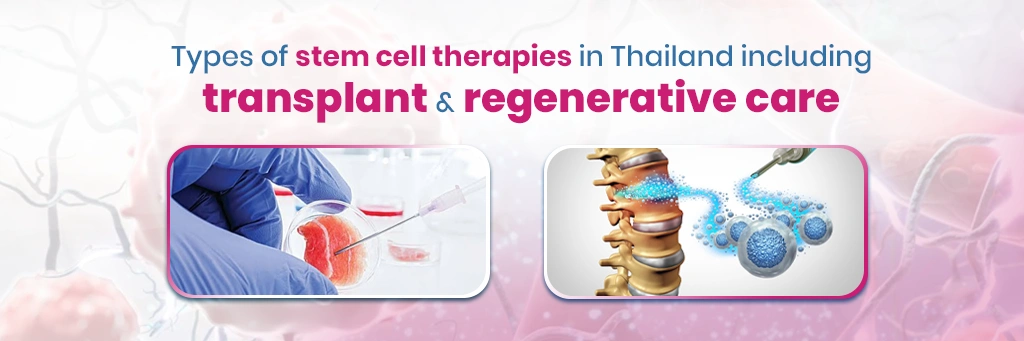
Before patients compare clinics, prices, or safety claims, they need to know what kind of treatment they are actually reading about. This matters because stem cell therapy is not one single treatment. It is a broad term that can cover very different medical uses.
In Thailand, patients may come across hospital-based transplant care, regenerative medicine therapies, and other marketed cell-based options. These may sound similar on the surface, but they differ in cell source, treatment goal, medical use, and level of scientific support. That is why it is important to look past the label and understand what each type really means.
Hematopoietic Stem Cell Transplant
The first type is a hematopoietic stem cell transplant. Doctors use this for blood cancers and some blood disorders. It can use the patient’s own cells, donor cells, or cord blood.
ThaiMedics already explains this area on its page about stem cell or bone marrow transplants. That page covers autologous, allogeneic, syngeneic, and cord blood transplant options. Thai hospitals have offered hematopoietic transplant care for many years.
Regenerative Medicine Therapies
The second type is regenerative medicine. This is the part most people mean when they search for stem cell clinic Thailand or stem cell treatment in Bangkok. These treatments often use mesenchymal stem cells, also called MSCs, for support in joints, tissue repair, inflammation, or recovery goals.
Competitor pages in Thailand often focus on this area. That is why patients often see these services first when they search online.
Other Marketed Cell-Based Options
The third type is other marketed cell-based options. Some clinics talk about umbilical cord stem cells Thailand, adipose-derived cells, or exosomes. These terms sound close, but they do not always mean the same thing.
The source of the cells, the way the cells are handled, and the health claim behind them can differ a lot. So, patients should not assume that all cell therapies follow the same process or have the same level of proof.
Is stem cell therapy in Thailand legal and regulated?
Yes, Thailand has rules in this space. But this area is also changing fast. So, patients should avoid broad claims that every stem cell product or service is fully approved for every use.
A key update came from the Thai FDA in March 2026. It said Thailand is moving ahead with a stronger Advanced Therapy Medicinal Products, or ATMP, system. That system covers areas like cell therapy, gene therapy, tissue-engineered products, and combined advanced products.
Another major update came in May 2026. Reports said Thailand issued a new decree that classifies advanced stem cell and cell-based therapies as medicines under the Drug Act. It also drew a line between minimally handled cells and therapies with more than minimal change, which would need full Thai FDA drug registration as ATMPs.
That sounds technical, but the lesson is simple. Stem cell regulations Thailand are becoming clearer. At the same time, the market still has many types of offers, claims, and treatment models.
So, stem cell safety Thailand depends on more than a good website. Patients should look at the doctor, the clinic, the lab process, the cell source, and the follow-up plan. A licensed stem cell clinic Thailand should be able to explain all of that in plain words.
This is where E-E-A-T matters. A strong article should not promise a cure. It should explain both the promise and the limits. That trust-first approach is often missing from sales pages, and it is one of the best ways to stand out.
Now that we know the legal side is real but still evolving, the next step is practical. How can a patient judge a provider in a safe way?
How to evaluate a stem cell provider in Thailand safely
Start with the basics. Ask what exact treatment is offered. A clear clinic should tell you the cell type, the source, the goal, and why they think it fits your case.
Next, ask who is in charge. A real doctor should lead the plan. The clinic should also explain risks and benefits, expected results, side effects, and what happens if the treatment does not help.
After that, ask about the lab side. Some competitor pages highlight GMP-approved facilities or strong lab standards. That does not solve every problem, but it is still a useful trust signal.
Then, ask about follow-up. This matters even more for foreign patients. Good care does not stop after one visit or one injection. There should be a plan for checks, updates, and support after treatment.
Watch for red flags too. Be careful if a clinic says one treatment helps almost every disease. Be careful if there is no clear doctor, no cell source details, or no honest talk about limits.
This is also where support services can help. Patients who need a second opinion or help comparing options can use medical consultancy for international patients. And if they want a specialist review, they can book a doctor’s appointment in Thailand.
These steps help people choose with more confidence. After safety, the next question is the one almost every reader asks. What affects the price?
What affects the cost of stem cell therapy in Thailand?
There is no one fixed price. Stem cell cost in Thailand can vary a lot. The condition, the clinic, the cell source, the dose, and the level of care all affect the final number.
Some ranking pages list a wide price range. For example, Bookimed says stem cell therapy in Thailand can range from about $1,800 to $13,000, based on factors like cell count, treatment area, and clinic setup. That wide gap shows why patients should compare package details, not just the headline price.
A lower price may not include everything. One clinic may include tests, doctor consults, airport pickup, hotel help, and follow-up. Another may charge extra for each part.
That is why the stem cell therapy price in Thailand needs context. Patients should ask what is included, what is optional, and what happens after the first visit. A cheap package can become costly if key care is left out.
This is also where Thailand medical tourism stem cell therapy searches often overlap with travel needs. People do not just buy a treatment. They may also need records review, hospital choice, travel dates, and clear support after they go home.
So, cost matters. But cost alone should never drive the decision. Once the price is clear, the next question is why so many people even look at Thailand in the first place.
Why Thailand draws international patients
Thailand has a strong name value in medical tourism. Many international patients already know the country for private hospitals, specialist access, and support for foreign visitors. That wider medical travel base helps explain interest in Stem Cell Therapy in Thailand, too.
Bangkok is often the center of that journey. It has many private hospitals, doctor networks, and medical travel services. That is why terms like stem cell treatment in Bangkok and foreign patient stem cell treatment in Thailand show up so often in searches.
For many people, the appeal is simple. They want quality care, faster access, and lower costs than they may see at home. They also want help with records, travel plans, and next steps.
That support matters more than many people think. Patients may need old test results, doctor letters, and visa help before they travel. ThaiMedics offers medical visa processing support for patients who need help with that step.
Thailand’s medical tourism model is one reason the market keeps growing. But demand alone does not tell the full story. We also need to look at the current trends shaping the field.
Current Trends in Stem Cell Therapy in Thailand
Thailand’s stem cell space is changing fast. Some changes are positive and show real progress. At the same time, more marketing means patients need to read carefully and ask smart questions.
Stronger Regulation
Thailand is putting more structure around advanced therapies. This is one of the biggest changes in the market right now.
More Commercial Activity
More clinics now market regenerative care, anti-aging programs, and recovery support. Some talk about longevity, tissue repair, or inflammation reduction. We can see this on current competitor pages across Bangkok and other hubs.
More Focus on Safety and Proof
Smart patients now ask harder questions. They want to know the cell source, the clinic standards, and the level of evidence behind each claim.
A Wider Research Push
A 2026 review in a peer-reviewed journal says Thailand is building a bigger role in cell and gene therapy, with new policy support and a national push around ATMP development.
This mix creates both hope and noise. On one side, there is real progress. On the other side, there is heavy marketing.
Who May Be a Candidate, and When Caution Is Needed
Not every person is the same. That is why there is no one answer for all patients. A safe choice depends on clear medical facts, honest advice, and the right treatment path.
- Patient eligibility varies based on diagnosis, age, health history, treatment goal, and doctor review.
- Some patients may need a transplant pathway while others may explore a regenerative option.
- Some people may need standard treatment first before looking at stem cell-based care.
- Clear medical advice matters because the plan should explain the condition, goal, limits, and next step.
- Risks and benefits should be explained simply so patients know what to expect before treatment.
- Broad claims need caution because not every condition has the same level of proof or support.
- Recovery time can differ a lot since a transplant is very different from an outpatient regenerative procedure.
- Patients should ask exact questions early so they understand the treatment, the process, and the follow-up plan.
- For continued care after travel, ThaiMedics offers telemedicine follow-up with Thai doctors.
- Once candidacy is clear, the next step should be safe planning, proper support, and careful coordination.
How ThaiMedics can support patients
ThaiMedics is not a stem-cell-only clinic. Its role is different, and that can be a strength in a guest post like this. The company supports international patients who need help finding doctors, planning care, and managing the travel side.
That means patients can get help before, during, and after treatment. The support may include specialist matching, hospital coordination, and step-by-step guidance for records and travel.
This matters because many people feel lost at the start. They may not know which hospital page to trust. They may not know whether they need a transplant expert, a regenerative clinic, or a second opinion first.
A neutral support layer can make that process easier. Patients can start with a doctor review, plan the trip, and then move forward with better facts. After care, they can also use post-treatment support in Thailand when follow-up help is needed.
This service angle fits the topic in a natural way. It does not push treatment. It helps people make safer choices.
What to remember about stem cell therapy in Thailand
Stem Cell Therapy in Thailand is a broad topic. It includes both stem cell transplant care and newer regenerative medicine offers. These are not the same, so patients should always ask what exact treatment is being discussed.
Thailand has real strengths. It has a strong medical tourism base, major private hospitals, and growing work in advanced therapies. It also has a market with many claims, which means patients need to look past sales words and focus on facts.
The safest path is simple. Know the cell source. Know the doctor. Know the goal. Know the limits.
Also, compare more than price. Look at safety, regulation, clinic quality, follow-up care, and support for foreign patients. A smart choice is rarely just the cheapest one.
For anyone exploring Stem Cell Therapy in Thailand, the best next step is clear medical advice and a careful review of options. When patients use trusted guidance, simple questions, and a full support plan, they are far more likely to make a safe and informed decision.
Start Your Medical Journey in Thailand With Trusted Support
Stem cell care can feel hard to understand at first. There are many claims, many clinics, and many treatment types. That is why patients should take the next step with clear facts and real support.
If you are looking into Stem Cell Therapy in Thailand, start with expert guidance that fits your health needs. ThaiMedics can help you review options, connect with the right doctors, plan travel, and stay supported after treatment.
From your first questions to your return home, the goal should be simple. Get safe care, honest advice, and a treatment path you understand. With the right support, you can move forward with more clarity and confidence.
Frequently Asked Questions
Many patients still have a few practical questions before they take the next step. The FAQs below cover some of the most asked topics that were not fully covered above, so readers can get quick and clear answers.
How soon can patients see results after stem cell therapy?
Results depend on the condition, treatment type, and the patient’s health. Some people may notice early changes in a few weeks, while others may need one to three months or longer to see clear results.
Does insurance cover stem cell therapy in Thailand?
Insurance cover depends on the policy and the reason for treatment. Many regenerative or wellness-based treatments are not covered, while some hospital-based procedures may be reviewed case by case by the insurer.
Are there side effects after stem cell therapy?
Side effects can vary by treatment type and patient history. Some people may have pain, swelling, or fatigue after treatment. More serious risks depend on the procedure, cell source, and overall medical condition.
How do patients know if a clinic is trustworthy?
Patients should check doctor credentials, clinic licensing, treatment details, and follow-up care. A trustworthy clinic should clearly explain the cell source, treatment goal, possible risks, and what evidence supports the treatment.
Do patients need to stay in Thailand after treatment?
That depends on the treatment plan. Some outpatient therapies may need only a short stay, while more complex procedures may need longer monitoring. Patients should always ask how much follow-up time is needed before booking travel.
Can stem cell therapy be used for anti-aging or wellness goals?
Some clinics in Thailand offer stem cell therapy for anti-aging, recovery, or wellness support. Still, the level of evidence is not the same for every use, so patients should ask what proof supports the claim.