

What happens after you fly home from treatment abroad? Your care does not stop at the airport gate. Post-treatment support keeps your recovery on track back home. It links your Thai doctor with your local one. A clear plan covers checkups, medicine and warning signs. This guide walks through each stage after discharge. You learn what to expect week by week.
Many patients worry about this gap the most. Good planning closes it before you even board. The sections below map your full recovery journey.
What Post-Treatment Support Means
What does post-treatment support cover for you? It is the care you get after treatment ends. This support spans both medical and practical needs. A coordinator tracks your progress from Thailand. Your treating doctor still reviews your case by video. A local doctor handles any hands on examination. Medicine guidance and rehab plans round out the care. Emotional support also forms part of good aftercare. Structured post-treatment support services tie these parts together. The goal is one unbroken chain of care. Nothing should fall through the cracks between countries. This matters most when two health systems must connect.
Your Recovery Timeline After Returning Home

What does the recovery journey look like overall? Each stage brings different needs and different people. The table below maps the full path home. Your treatment type can shift these timings a little.
| Timeframe | What Happens | Who Leads It |
| Before discharge | Records, clearance and follow up plan | Treating hospital team |
| Week 1 at home | Coordinator contact and first video review | Care coordinator |
| Weeks 2 to 4 | Local exam, wound checks and medicine review | Local doctor |
| Months 1 to 3 | Rehabilitation and test result tracking | Therapist and specialist |
| Months 3 and beyond | Scheduled scans and long term monitoring | Thai specialist |
Before You Leave Thailand
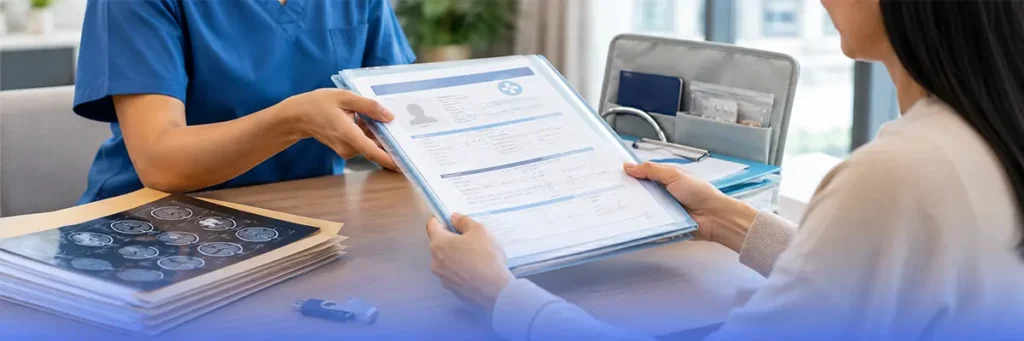
What should you arrange before your flight home? The groundwork starts while you are still in hospital. A strong handover prevents most problems later.
Documents to Collect
Your paperwork matters more than most patients expect. A local doctor cannot help without it.
● The discharge summary from your treating hospital.
● Your full operative or procedure report.
● All laboratory and imaging results.
● A clear list of your current medicines.
● Written wound care instructions.
● Your follow up schedule and dates.
● Direct contact details for the hospital team.
Ask for English copies of every document. Digital files help you share them fast later. Cloud storage keeps a backup safe during travel.
Clearance and Travel Timing
Your doctor decides when flying is safe. A fit to fly check confirms this before departure. Some surgeries need extra days before air travel. Cabin pressure can affect fresh wounds and swelling. Rushing this step can undo good surgical work. Long flights also raise the risk of blood clots. Movement and fluids help lower that risk. The right timing protects your result and your health.
Your First Weeks Back Home
What happens in the first weeks at home? This period needs the closest attention. Your coordinator reaches out soon after you land. A first video review checks your early progress. You then share your records with a local doctor. That doctor can examine wounds in person. A medicine review confirms local equivalents for each drug. Drug brand names often differ between countries. Local tests can also start during this window. Your energy may stay low through these early weeks. Rest and light movement both help your body heal. Early contact catches small problems before they grow. A booked doctor appointment keeps this schedule firm.
How Telemedicine Supports Your Recovery

How does a doctor in Bangkok follow your case? Video consultations bridge the distance well. This keeps your original specialist involved throughout. Your records stay with the team that treated you.
What Telemedicine Can Do
A telemedicine call handles many follow up needs. It saves you a second expensive flight.
● Review your healing progress through photos and video.
● Discuss test results from your local lab.
● Adjust medicine doses when needed.
● Answer questions about activity and diet.
● Decide if a local examination is needed.
What Telemedicine Cannot Do
A screen has clear limits worth knowing. It cannot replace a hands on exam. Blood tests and scans need a local facility. Wound dressing changes need a nurse nearby. Urgent symptoms always need immediate local care. A video call should never delay emergency treatment.
Medication and Rehabilitation at Home
How do you manage medicine after returning home? Your prescription needs local translation and supply. A pharmacist can match your drugs to local brands. Some medicines may not exist in your country. Your doctor then finds a safe alternative for you. Rehabilitation follows a similar path at home. Physiotherapy rebuilds strength after orthopedic or cancer surgery. A local therapist works from your Thai plan. Light walking often starts within the first week. Your therapist raises the effort as you gain strength. Diet guidance supports healing through these weeks. Steady routines make recovery far smoother.
Normal Recovery Versus Warning Signs

Which symptoms are normal and which need help? This question worries most patients at home. Knowing the difference brings real peace of mind.
Expected Recovery Symptoms
Some discomfort is a normal part of healing. These signs settle with time in most cases.
● Mild pain around the surgical site.
● Gradual swelling that reduces over time.
● Tiredness during the first few weeks.
● Light bruising that fades on its own.
Symptoms That Need Urgent Care
Other signs need fast medical attention. Local emergency care comes first, not a video call.
● Fever with chills or a hot wound.
● Heavy or uncontrolled bleeding.
● Chest pain or trouble breathing.
● Sudden severe swelling in one leg.
● Pus or a bad smell from a wound.
Your local hospital handles these situations best. They should know about your treatment abroad right away. Round the clock emergency support can guide you through it.
Long-Term Follow-Up and Monitoring
How long does follow up care continue? The answer depends on your treatment type. Cancer patients need scans and reviews for years. Orthopedic patients track mobility over several months. Cardiac patients monitor heart function long term. Your care plan sets the exact schedule. A coordinator reminds you before each due date. Test results travel back to your Thai specialist. This ongoing review keeps your recovery on course. A missed scan can hide an early problem. Calendar reminders help you stay on schedule. This long view protects your treatment result.
Costs and Insurance for Follow-Up Care
Who pays for care after you return home? This question catches many patients by surprise. Your Thai package seldom covers care at home. Local consultations and tests come from your own budget. Some insurers cover follow up after treatment abroad. Others exclude any care linked to overseas surgery. A policy check before travel avoids a nasty shock. Telemedicine reviews often cost far less than clinic visits. Some providers include a set number of free calls. Tests, medicine and physiotherapy sessions all need planning. A medical consultancy review can clarify these costs early.
Support for Families and Caregivers
Who helps the family through this recovery? Caregivers carry much of the daily load at home. They need clear guidance just as patients do. A caregiver should understand the medicine schedule. They also learn the warning signs to watch. Wound care training helps them assist with confidence. Emotional strain affects families too during recovery. Counseling support eases that weight for everyone. Simple written notes help caregivers track each task. Clear roles prevent confusion during busy recovery days. A well informed family speeds the whole recovery.
Continue Your Recovery With ThaiMedics
Coming home should feel like progress, not abandonment. The right team stays with you the whole way. ThaiMedics has supported international patients since 2017. The team arranges your follow up calls and reminders. They help share records between your doctors. Medicine questions and rehab plans get clear answers. Emergency guidance stays available when you need it. Our post-treatment support keeps your care connected across borders. You can reach the team long after you fly home. Your recovery matters as much as your treatment did.
Frequently Asked Questions
Patients ask a few key questions before flying home. These short answers help you plan your recovery.
What is post-treatment support in medical tourism?
It is the care you receive after treatment ends. This support links your Thai doctor with care at home.
How soon should I contact my doctor after returning?
Within the first week is a good rule. Urgent symptoms need immediate local medical care.
Can I consult my Thai doctor from my home country?
Yes, video consultations keep your specialist involved. This works well for planned follow up reviews.
Which documents should I bring home from Thailand?
You need a discharge summary and operative report. Test results and a medicine list also matter.
What should I do if a complication develops?
You need local medical care without any delay. Your treatment records should reach the treating team.
How long does follow up care last?
It depends on your treatment and recovery pace. Cancer follow up can continue for several years.